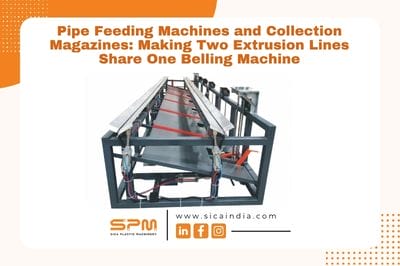
A pipe chamfering machine cuts a bevelled edge onto the end of a plastic pipe so it can be joined cleanly into a fitting or socket. In a downstream extrusion line, chamfering usually happens immediately after cutting — which is why SICA integrates both operations into a single machine, SHARPSAW. SHARPSAW handles HDPE, PPR, PVC and PP, automatically adjusting chamfer depth to suit the pipe and the joint.
Why chamfering matters
There are five reasons producers chamfer pipe ends rather than leaving them square-cut:
- Smooth assembly into fittings — a bevel removes cutting burrs and shavings so the pipe seats fully.
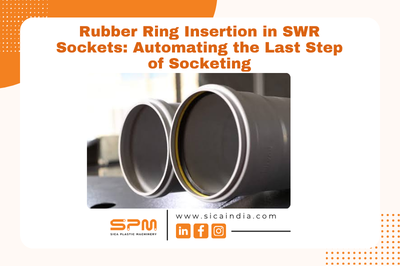
- Protecting the rubber seal — a square edge can roll or cut an O-ring during insertion; a chamfer guides it.
- Faster jointing on site — installers push chamfered pipe home in one motion.
- Lower rejection — consistent edges reduce leak failures at the socket.
- A finished look — clean ends signal quality to the buyer. The mechanics are covered in depth in The Importance of Chamfering Plastic Pipes.
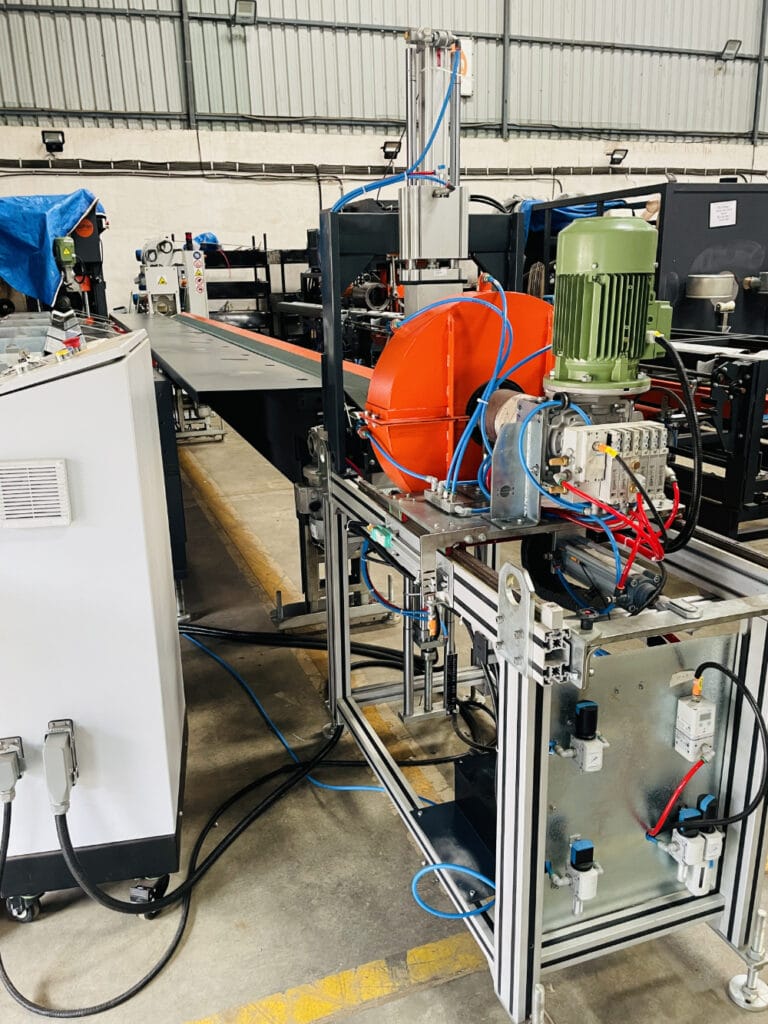
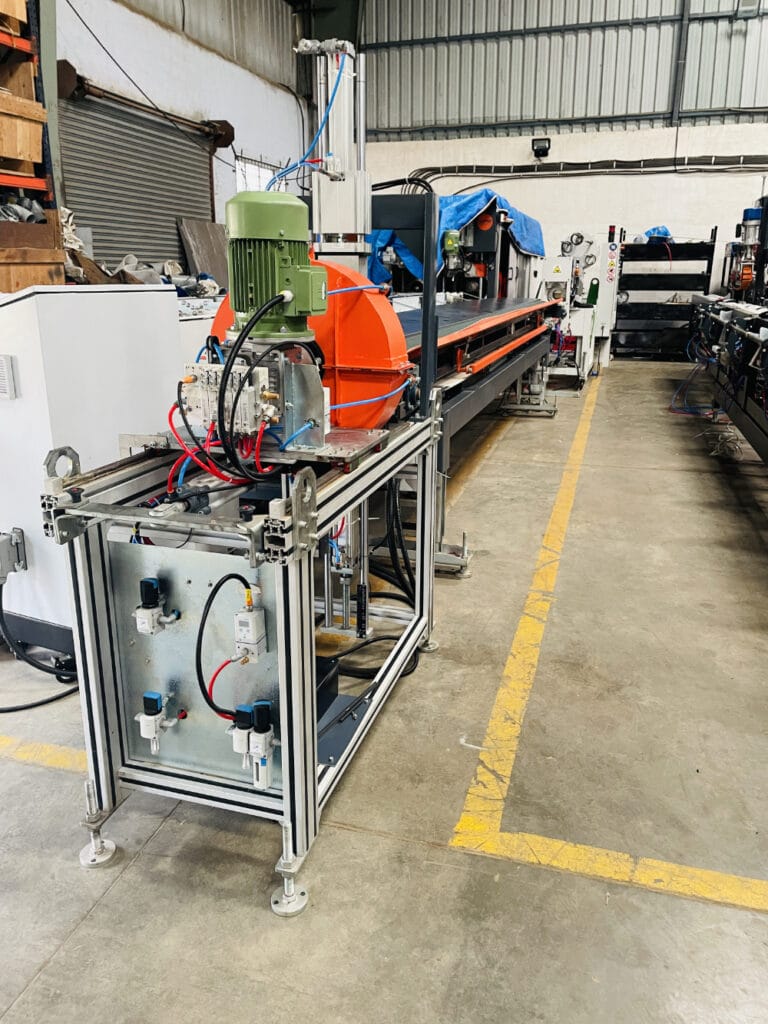
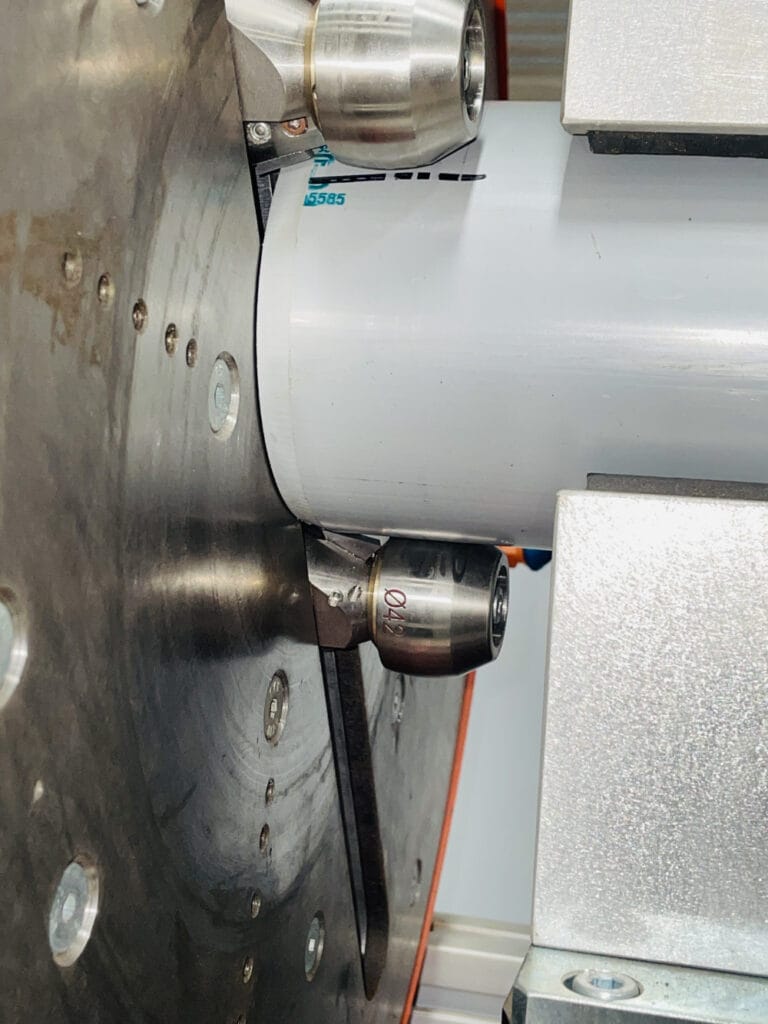
Inline vs offline chamfering machines
An inline chamfering machine sits inside the running extrusion line and chamfers every pipe as it is cut — this is how SHARPSAW operates. An offline unit chamfers pipes after production, on the opposite side of the socket; SICA’s CHAMFER 250 is a standalone offline unit that chamfers pipes up to 250 mm to a maximum 7 mm depth, PLC-controlled from a 5.7-inch panel.
Disc vs knife cutting systems
SHARPSAW comes in two versions. The D version uses a planetary disc rotary system with high-speed servo motors for PVC and PP. The K version uses a planetary knife system for HDPE and PPR. Both clamp the pipe, run a hydraulically driven cutting arm with a feeler pin for thick-walled and out-of-round pipe, and adjust chamfer depth automatically. A dynamically balanced rotor plus chip extraction keeps cuts clean. For a full comparison of cutting mechanisms, see Four Fundamental Types of Plastic Pipe Cutting Machines.
How to choose a chamfering machine
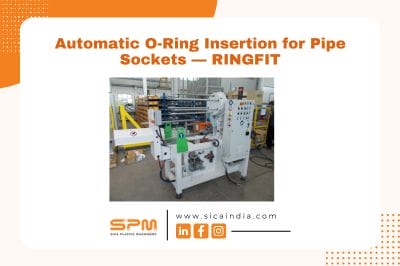
Match the machine to four variables: pipe material (PVC/PP favour a disc system, HDPE/PPR a knife system), diameter range, line speed, and whether chamfering must run inline or offline. For socket-and-spigot drainage pipe, also confirm the unit pairs with your belling and ring-insertion steps.
SHARPSAW is built for inline cutting and chamfering at high extrusion speeds; CHAMFER 250 covers standalone external chamfering. Browse the full downstream product range or read The Ins and Outs of Cutting and Chamfering Plastic Pipes for the production-floor view.