Ring insertion is the step where a rubber sealing ring is fitted into a pipe socket after belling, so the finished joint seals against leaks. SICA automates it with RINGFIT, an automatic ring insertion device that places rubber rings onto SWR sockets immediately after socketing.
How RINGFIT works
- Connects to any belling machine via a link channel, becoming an inline part of the production line.
- Cartridge holder stores up to 300 rings at a time for uninterrupted running.
- Speed up to 400 pipes per hour, matching high-output belling lines.
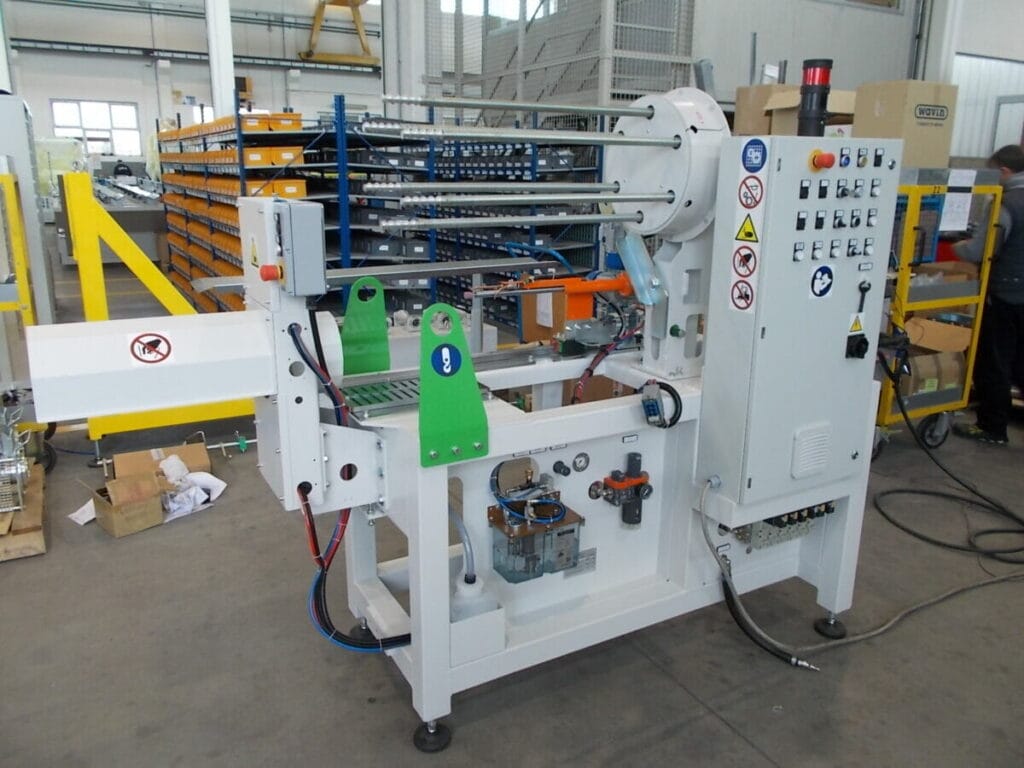
Automating ring insertion removes a slow, error-prone manual step: hand-fitted rings are inconsistent and a mis-seated ring causes joint leaks and rejects. RINGFIT standardises placement at line speed.
Where ring insertion fits in the socketing process
Ring insertion follows belling. Sockets themselves come in several forms — SWR, elastomeric and O-ring — each explained in Types of Sockets in Plastic Pipes. The belling itself is done by FASTFORM, SICA’s automatic inline belling machine for solvent-cement, SWR and O-ring (elastomeric) sockets. Choosing the right belling machine is covered in How To Choose A Belling Machine.
Together, FASTFORM and RINGFIT automate the full socket-and-seal sequence. See the complete product range.